


iPhone / iPhone Duo Live
Last night before you are out of bed. Apple Health vitals, Face ID.
Download on the App Store Apnealytics™
Free on every plan: unlimited imports, the full dashboard and your last 30 nights.
 Compatibility checkerWill my machine work?Type your model. You get a straight answer: supported, waitlist, or why not.Check my machine
If it writes an SD card, we probably read it. ResMed AirMini has no card, so no app can read it.
Sleep Check-up
3 of 6 checks done
Six short screeners, one picture of how you sleep. Earn a milestone for each, save results and get retake reminders.
Latest milestone: Sleepiness check done
 NEWTrack your 90-day compliance windowOpen the calculator
13 free tools. No account needed — sign in to save results and fill answers from your own CPAP data.
Last night before you are out of bed. Apple Health vitals, Face ID.
Download on the App StoreOne account on every screen. Apple Watch vitals sync through Apple Health.
A side-by-side look at the three mask styles, and the sleepers each one suits best.
Part ofHow to Read CPAP Data
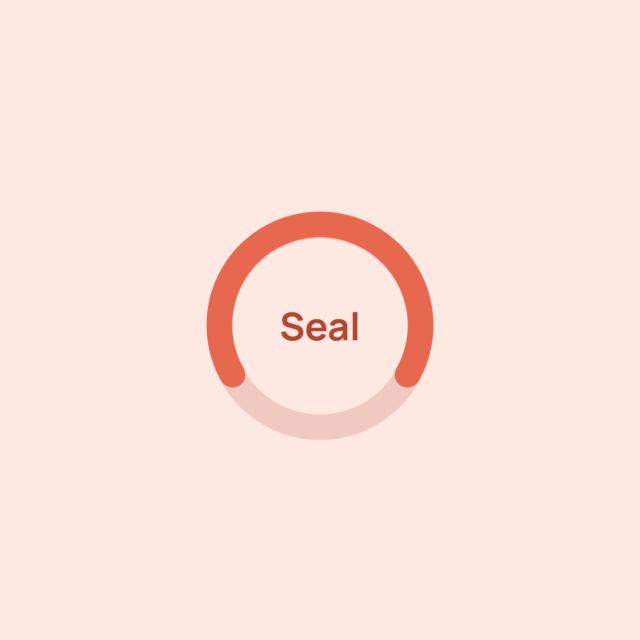
Your mask-seal ring shows how well a style held across the night, a useful way to judge a change.
There is no best CPAP mask, only the best one for how you breathe and sleep. The three main styles solve different problems, and each gives up something in return. This guide helps you narrow the choice before you try one, then use your own leak data to confirm it.
| Nasal pillows | Nasal mask | Full-face mask | |
|---|---|---|---|
| How it seals | Soft inserts at the nostrils | Cushion around the nose | Cushion around nose and mouth |
| Skin contact | Minimal | Moderate | Largest |
| Suits | Facial hair, glasses, feeling enclosed, side and stomach sleepers | Nose breathers wanting a stable, familiar fit | Mouth breathers, a blocked nose, people who move between nose and mouth |
| Watch out for | Dry or irritated nostrils; air blowing at the nose | Mouth leak if your mouth falls open | More leak around beards; bulk for side sleepers |
See the individual pages for nasal pillows, nasal masks and full-face masks for typical leak signatures and popular models.
If you breathe through your mouth, whether from habit, a cold or allergies, a full-face mask avoids the mouth leak that makes nasal styles hiss and dries your mouth. Some people keep a nasal mask and add a chin strap; others simply do better with full face.
If you sleep on your side or stomach, low-profile styles move less on the pillow. Nasal pillows are the usual first try, and a good pillow shape matters as much as the mask.
If you have a beard or heavy stubble, a cushion that sits on the skin around the mouth leaks easily. Pillows avoid that area entirely.
If you feel closed in, minimal-contact masks are less claustrophobic, and you can read or wear glasses with pillows.
Our guide to choosing a CPAP mask walks through breathing, sleep position, pressure and sizing in more depth, and the free Mask Finder turns a few answers into a short list.
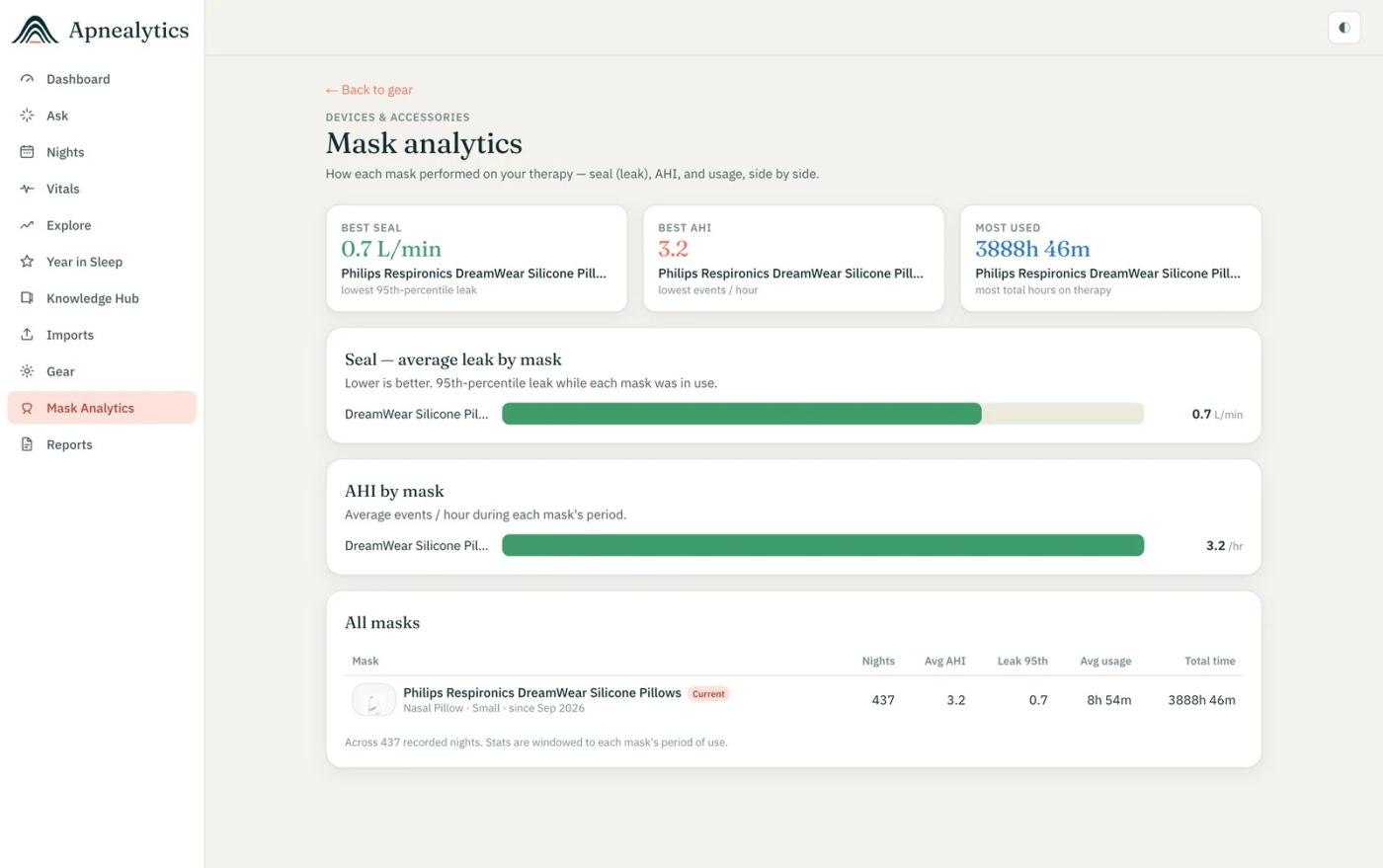
A week or two on a new mask is enough to judge it. Look at three things: leak P95 and spikes, the seal ring, and how you feel in the morning (dry mouth, sore nose, marks on your face). The pattern guide in CPAP mask leaking? Seven fixes to try tonight shows how to read the leak graph and what to change before you give up on a style.
Not medical advice. Apnealytics is a tracking and coaching tool, not a diagnostic device. Machine-estimated numbers are not a clinical diagnosis; talk to your clinician about your therapy.
Written by
Founder of Apnealytics. A CPAP user who builds software, not a sleep physician.
More from the teamKeep reading
A scannable checklist of night and daytime signs, how symptoms differ in women, men and children, the signs people miss, and what to do next.
Home test vs in-lab sleep study, what a test night is like, what AHI, REI and RDI mean, what it costs and what happens next.
CPAP, oral appliances, Zepbound, Inspire, surgery and home steps compared: who each suits, how strong the evidence is, and how to tell it is working.
Upload your SD card and see your nights in plain English. Free to start.
 DashboardSleep Score, AHI band, leak and pressure
 Trends & historyA year down to a night
 Breath-by-breath viewerAirflow, pressure, leak tracesPro
 SpO₂ overlayOximeter data on the same nightPro
 Pressure insightsP95, set range, EPR and ramp
 SD card importDrop the card folder, only new nights added
 Mask fit & gearWhich mask actually seals
 Ask your dataPlain-English questions, your own AI keyBYOK
 Year in SleepYour therapy year in one storyNew
 Compliance reportFinds the qualifying window for youPro
 Share with your doctorRead-only, revocable links
 Companion appiPhone, iPad and Android
 Privacy & securityYour data, locked to you
 ResMed AirSense 10 & 11Supported
 ResMed AirCurve 10 & 11 VAutoSupported
 ResMed S9 / LumisSupported
 Philips DreamStation 1In testing
 Fisher & Paykel SleepStyleIn testing
 Löwenstein / DeVilbissWaitlist
 React Health Luna G3In testing
 Transcend MicroWaitlist
 Full face masksFit, leak signature, Mask Analytics
 Nasal masksOver-nose and cradle styles
 Nasal pillowsMinimal-contact fit tips
 Wellue O2RingSupported
 Contec CMS50 familySupported
 Apple Health / Health ConnectResting HR, HRV, SpO₂, sleepSupported
 Mask finderSeven questions, a ranked mask typeYour data
 Machine finderA two-machine shortlist for your prescription
 What is AHI?The apnea-hypopnea index, explained
 What is a good AHI on CPAP?
 CPAP leak rate explained
 Pressure settings explained
 Reading CPAP waveformsAll 17 explainers
 Apnealytics vs SleepHQ
 Apnealytics vs OSCAR
 Apnealytics vs myAir
 Apnealytics vs DreamMapper
 SleepHQ vs OSCARBest CPAP apps in 2026
 How to read CPAP dataStart here: six numbers, in order
 Read your CPAP SD card
 Share data with your doctorChoosing a CPAP mask
 Travel with CPAPAll 11 guides
 iPhone / iPhone DuoLast night before you are out of bed. Apple Health vitals, Face ID.Live
 iPadSame universal app, side-by-side panes and full-width waveforms.Live
 AndroidPhones, tablets and foldables, with Health Connect built in.Live
 Web portalWhere your SD card goes. Every chart, report and setting.Live


