


iPhone / iPhone Duo Live
Last night before you are out of bed. Apple Health vitals, Face ID.
Download on the App Store Apnealytics™
Free on every plan: unlimited imports, the full dashboard and your last 30 nights.
 Compatibility checkerWill my machine work?Type your model. You get a straight answer: supported, waitlist, or why not.Check my machine
If it writes an SD card, we probably read it. ResMed AirMini has no card, so no app can read it.
Sleep Check-up
3 of 6 checks done
Six short screeners, one picture of how you sleep. Earn a milestone for each, save results and get retake reminders.
Latest milestone: Sleepiness check done
 NEWTrack your 90-day compliance windowOpen the calculator
13 free tools. No account needed — sign in to save results and fill answers from your own CPAP data.
Last night before you are out of bed. Apple Health vitals, Face ID.
Download on the App StoreOne account on every screen. Apple Watch vitals sync through Apple Health.
CPAP, oral appliances, Zepbound, Inspire, surgery and home steps compared: who each suits, how strong the evidence is, and how to tell it is working.
Part ofHow to Read CPAP Data
From CPAP to weight loss, oral appliances, implants and surgery: the right option is the one that works for you and that you will use.
The main sleep apnea treatment for moderate to severe obstructive sleep apnea (OSA) is positive airway pressure, usually a CPAP or auto-CPAP machine [1][7]. If that doesn't work for you, proven alternatives include a custom oral appliance, weight loss (including the prescription drug tirzepatide for some adults), positional therapy, an implanted nerve stimulator and surgery [2][3][4][7]. The right choice depends on your severity, anatomy, weight and what you will actually use every night.
This guide explains each option, who it suits and how strong the evidence is. It's for education, not diagnosis. Treatment decisions belong with a sleep physician who has seen your sleep study. Not tested yet? Start with our guide to getting a sleep apnea test.
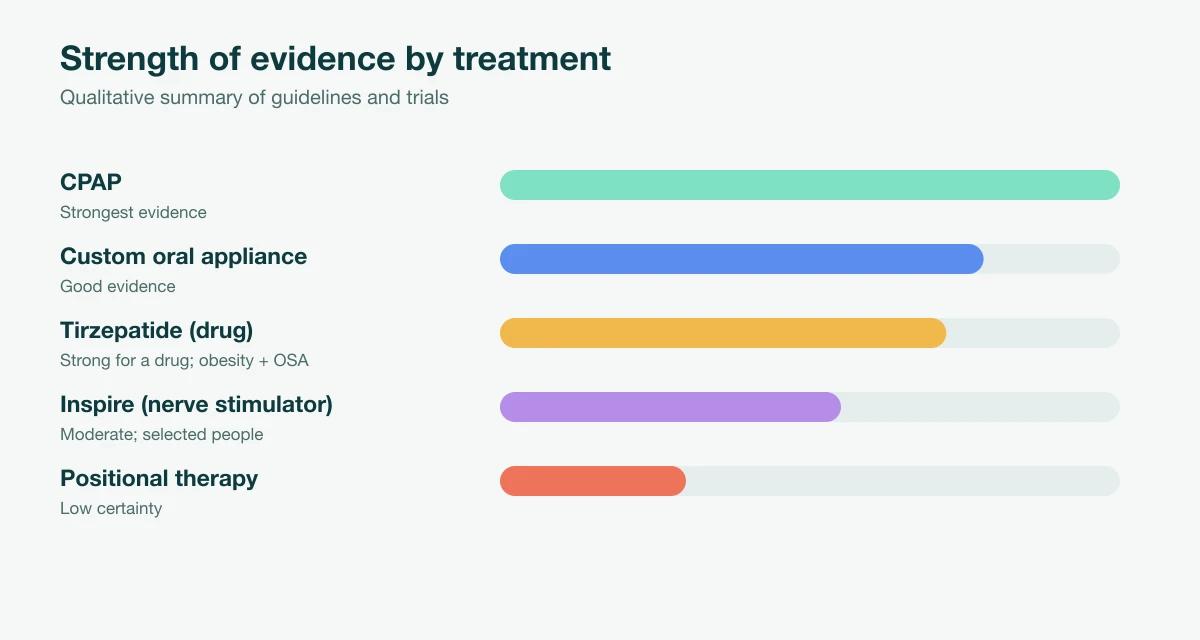
The table lists the main treatments for adults with OSA, roughly in the order a sleep clinician would consider them.
| Treatment | How it works | Who it usually suits | Evidence strength |
|---|---|---|---|
| CPAP / auto-CPAP (APAP) | Pressurized air through a mask holds the airway open | Most adults with OSA and symptoms, especially moderate to severe | Strongest. AASM strong recommendations; CPAP and APAP equivalent [1] |
| Custom oral appliance | Dentist-made device moves the lower jaw forward | Mild to moderate OSA; people who can't tolerate CPAP [2][7] | Good. Lowers AHI less than CPAP on average [2] |
| Weight loss, incl. tirzepatide (Zepbound) | Less tissue narrowing the airway | Adults with obesity; tirzepatide approved for moderate to severe OSA with obesity [4] | Strong for tirzepatide (two 52-week randomized trials) [5]; observational for weight loss generally [10] |
| Positional therapy | Keeps you off your back | Apnea that happens mainly on your back | Low certainty; better than nothing, less than CPAP [11] |
| Hypoglossal nerve stimulation (Inspire) | Implant moves the tongue forward as you breathe in | Moderate to severe OSA, can't use PAP, meets anatomy criteria [9] | Moderate. FDA-approved; key trial uncontrolled [8][9] |
| Airway or jaw surgery | Removes or repositions tissue or bone | Selected people who can't use CPAP, or with a fixable blockage [3][7] | Varies by procedure; AASM recommends surgical referral if CPAP fails [3] |
| Bariatric surgery | Major, lasting weight loss | BMI 35 or higher and can't use CPAP [3] | AASM strong recommendation to refer [3] |
| Lifestyle changes | Less alcohol, exercise, side sleeping, nasal care | Everyone, alongside other treatment [7] | Supportive; rarely enough alone for moderate to severe OSA |
AASM is the American Academy of Sleep Medicine, whose guidelines most US sleep clinicians follow.
CPAP has the most evidence. The AASM's 2019 guideline strongly recommends PAP for adults with OSA and excessive sleepiness [1]. It also suggests PAP when OSA hurts quality of life or comes with high blood pressure [1].
The guideline treats fixed CPAP and auto-adjusting APAP as equally good for ongoing care, and suggests either over bilevel for routine OSA [1]. Head to head, CPAP lowers the apnea-hypopnea index (what AHI means) more than oral appliances or positional therapy [2][11].
For equipment help, see our guides to sleep apnea machines and choosing a CPAP mask.
CPAP only works on the nights, and hours, you wear it. The AASM notes that use in the first days to weeks predicts long-term use [1]. People also tend to overestimate their own use, so objective machine data matters [1]. Education, early troubleshooting and remote monitoring all improved adherence in studies [1].
Insurers care too. For Medicare, continued coverage after three months needs a face-to-face re-evaluation. It also needs PAP use of 4 or more hours per night on 70% of nights during a consecutive 30-day period in those first three months [6]. That's at least 21 of 30 nights. Our CPAP usage and adherence guide explains how this is counted.
Mask discomfort, leaks, dryness and pressure that feels too strong are common reasons people quit. Most are fixable with your care team. Never change your prescribed pressure yourself.
Mild OSA (an AHI of 5 to under 15) has more options.
PAP still helps if you have symptoms. The AASM's PAP recommendations are based on sleepiness, quality of life and blood pressure, not on AHI cut-offs alone [1].
Oral appliances are a common alternative for mild or moderate OSA [7]. For mild OSA, one study found no significant difference between CPAP and oral appliances in reaching a target AHI, though evidence was limited [2].
Other options include positional therapy for back-dependent apnea [11] and weight loss. In one long-term cohort, losing 10% of body weight was linked to about a 26% drop in AHI [10]. Mayo Clinic also notes a newer daytime tongue-stimulation device that may help very mild cases, though it doesn't replace CPAP for moderate to severe OSA [7].
Mild doesn't mean ignore it. Our article on whether sleep apnea is dangerous covers the risks.
Good alternatives exist, but each suits a different person.
A custom oral appliance moves your lower jaw forward to keep the airway open. The AASM and the American Academy of Dental Sleep Medicine recommend them for adults who can't tolerate CPAP or prefer an alternative [2].
The guideline prefers a custom, titratable device from a qualified dentist over an over-the-counter one, because custom devices lowered AHI more [2]. It also recommends a follow-up sleep test to confirm it works [2]. For severe OSA, CPAP stays first-line [2]. See our guide to sleep apnea devices.
There is now one FDA-approved medicine for OSA, and it's an injection, not a pill. On December 20, 2024, the FDA approved Zepbound (tirzepatide) for moderate to severe OSA in adults with obesity, used with a reduced-calorie diet and more activity [4].
Approval rested on two 52-week trials in 469 adults without type 2 diabetes, one off PAP and one on PAP [4][5]. Average starting AHI was about 50 events per hour [5]. Compared with placebo [5]:
Common side effects include nausea, diarrhea, vomiting and constipation, and there are important warnings [4]. Only a prescriber can say if it's right for you. Some people still need treatment after losing weight [7]. Other GLP-1 drugs, such as Ozempic, are not FDA-approved specifically for sleep apnea.
A vibrating wearable, special pillow or tennis ball sewn into a shirt keeps you off your back [7]. A 2019 Cochrane review found it lowered AHI by about 7 events per hour versus no treatment [11]. CPAP was still better by about 6 events per hour, though people wore positional devices longer [11]. Studies were small and short [11].
This implant, placed in the upper chest, stimulates the nerve that moves your tongue forward as you breathe in [7]. The FDA indication covers adults 22 and older with moderate to severe OSA (AHI 15 to 100) who can't use or tolerate PAP and have no complete concentric collapse at the soft palate [9]. In 2023 the recommended upper BMI rose from 32 to 40 [9].
In the 126-person STAR trial, median AHI fell from 29.3 to 9.0 events per hour at 12 months, a 68% drop [8]. That study had no control group [8].
Surgery is usually considered when other therapies fail or don't fit your life [7]. The AASM's 2021 guideline recommends referring adults who can't use CPAP to a sleep surgeon if BMI is under 40, and to a bariatric surgeon if BMI is 35 or more [3]. With a major blockage like large tonsils, it suggests trying CPAP first [3].
Common procedures include [7]:
Results vary by procedure and person. Ask how success will be measured, and whether you'll have a sleep test afterward.
Sometimes, but not for most people.
Apnea can improve a lot, or resolve, when the cause is removed. Weight is the clearest example. In one long-term study, a 10% weight gain was linked to about a 32% rise in AHI, and a 10% loss to about a 26% fall [10]. In the tirzepatide trials, up to about half reached a near-normal or mild, low-symptom level at one year [5].
Surgery can cure apnea when there's one fixable blockage. In children with large tonsils, the American Academy of Pediatrics recommends removing tonsils and adenoids first, with CPAP if apnea persists [14].
But many people still have apnea afterward, and weight regain or aging can bring it back [7]. A repeat sleep test, not just feeling better, is the honest way to know [2]. CPAP, oral appliances and implants treat apnea while you use them. They don't cure it.
Central sleep apnea (CSA) is different. The airway isn't blocked; the brain briefly stops signaling you to breathe. It can be linked to heart failure, opioids, high altitude, or appear after starting CPAP.
The AASM's 2025 CSA guideline makes only conditional recommendations, because evidence is limited [13]. Depending on the cause, it suggests CPAP, adaptive servo-ventilation (ASV), bilevel with a backup rate, low-flow oxygen, the medicine acetazolamide, or an implanted phrenic nerve stimulator [13]. It suggests against bilevel without a backup rate [13].
ASV needs special care in heart failure with reduced ejection fraction. The guideline limits it there to experienced centers with close monitoring [13].
If your CPAP data shows many central events, raise it with your clinician. Our guide to central vs. obstructive apneas on CPAP explains those flags.
Home steps support medical treatment. They rarely replace it for moderate to severe OSA.
What has real support:
Be cautious with over-the-counter mouthguards, since guidelines prefer custom devices [2]. Mouth taping isn't an approved sleep apnea treatment; ask your clinician first. And less snoring doesn't prove apnea is treated.
Feeling better is a great sign, but check three things.
1. Symptoms. Less daytime sleepiness, fewer morning headaches, and less snoring. Track sleepiness with the Epworth Sleepiness Scale interpreter.
2. Residual AHI. On PAP, your machine estimates events per hour. For oral appliances and surgery, a follow-up sleep test confirms the result [2]. See what a good AHI on CPAP is. Machine-estimated AHI is not a clinical diagnosis.
3. Usage. Watch for slips below about 4 hours a night, the Medicare benchmark [6]. Leaks matter too; see our CPAP leak rate guide.
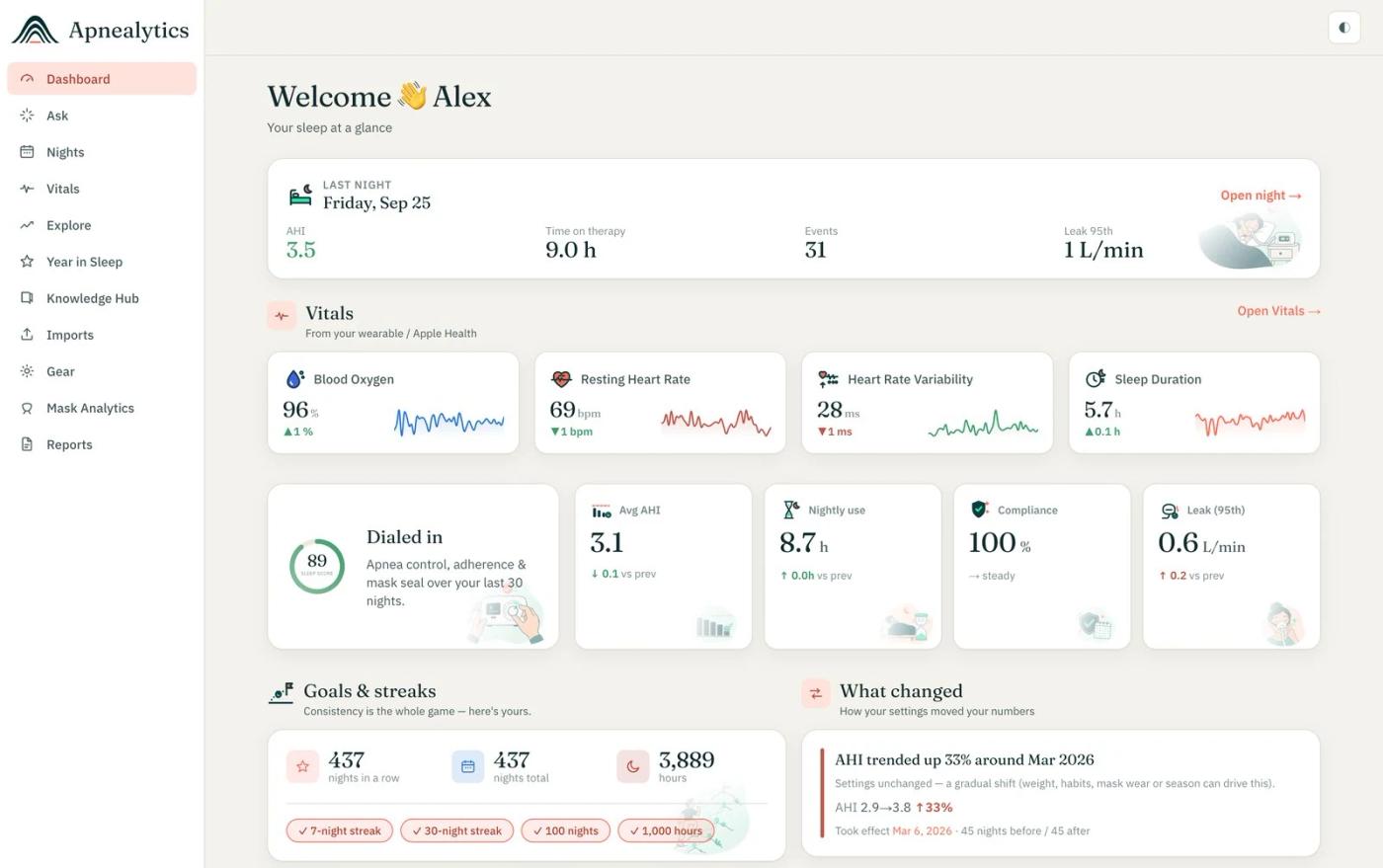
Apnealytics reads the SD card from ResMed machines (Philips DreamStation 1 and Fisher & Paykel SleepStyle are in testing). It shows nightly AHI, usage, leak and pressure trends in one place. It doesn't diagnose or change treatment, but it makes patterns easy to spot and share.
Contact your care team if you're still sleepy, snoring returns, or your weight changes by 10% or more [7].
The best sleep apnea treatment lowers your AHI, eases your symptoms, and is one you'll use every night. For most adults with moderate to severe OSA, that starts with CPAP, and there are now more proven alternatives than ever.
If you're on CPAP, Apnealytics helps you see whether treatment is doing its job. Upload your SD card, check AHI and usage trends, and bring clear charts to your next appointment. Free and Pro plans are available.
For moderate to severe obstructive sleep apnea, CPAP or auto-CPAP has the strongest evidence. It lowers AHI more than oral appliances or positional therapy [1][2][11]. But effectiveness depends on use, and a treatment you wear all night may beat a stronger one you abandon. Your sleep physician can help you weigh both.
Usually not without a change in its cause. Significant weight loss can lower AHI, and some people reach a normal or mild level [5][10]. Surgery can resolve apnea when there's one fixable blockage, like large tonsils in children [14]. Many people still need ongoing treatment, so a repeat sleep test is the best way to know [2].
Not yet. The only FDA-approved medicine for obstructive sleep apnea is tirzepatide (Zepbound), an injection approved in December 2024 for adults with moderate to severe OSA and obesity [4]. It works mainly through weight loss and is used with diet and exercise [4]. Other weight-loss drugs aren't approved specifically for sleep apnea.
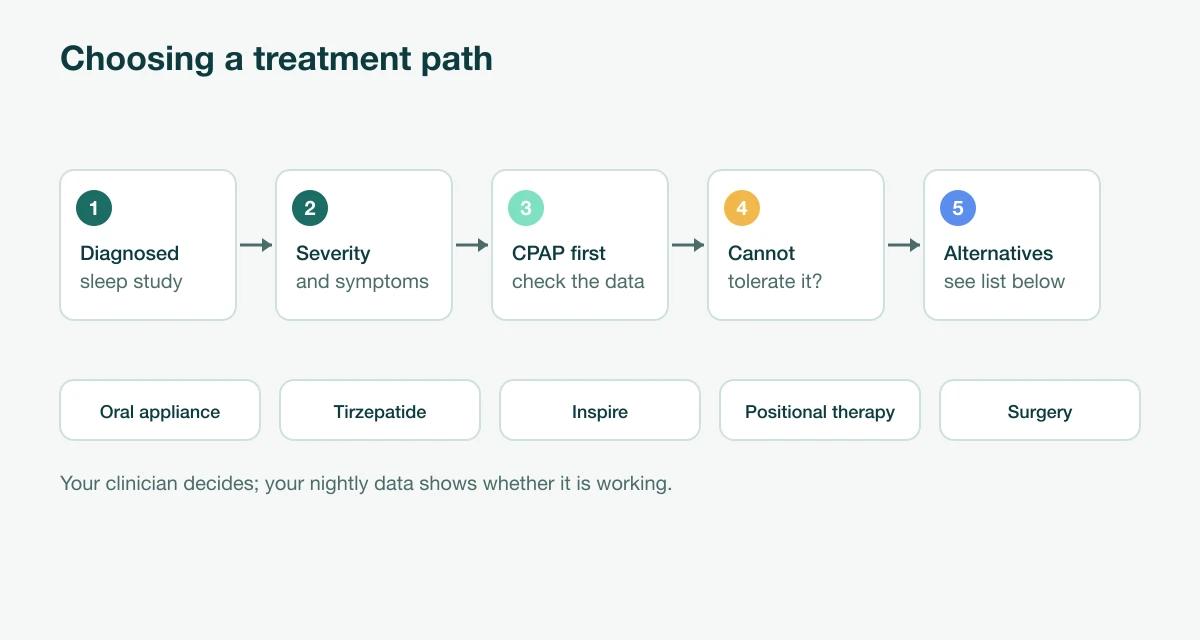
It depends on you. A custom oral appliance suits many people with mild to moderate OSA [2]. Tirzepatide is an option for adults with obesity [4]. Inspire suits some people with moderate to severe OSA who can't use PAP [9]. Positional therapy helps back-dependent apnea [11], and surgery may help selected people [3].
Often, but rules vary. For Medicare, ongoing CPAP coverage after three months requires a doctor's re-evaluation and use of 4 or more hours a night on 70% of nights in a 30-day stretch [6]. Coverage for oral appliances, implants, surgery and medicines differs by plan, so check with your insurer first.
CPAP can cut breathing events from the first night it's used well, though comfort and benefits often build over weeks. The AASM notes early use predicts long-term use, so the first weeks matter [1]. Weight-loss approaches take much longer; the tirzepatide trials measured results at 52 weeks [5].
Not medical advice. Apnealytics is a tracking and coaching tool, not a diagnostic device. Machine-estimated numbers are not a clinical diagnosis; talk to your clinician about your therapy.
Written by
Founder of Apnealytics. A CPAP user who builds software, not a sleep physician.
More from the teamKeep reading
A scannable checklist of night and daytime signs, how symptoms differ in women, men and children, the signs people miss, and what to do next.
Home test vs in-lab sleep study, what a test night is like, what AHI, REI and RDI mean, what it costs and what happens next.
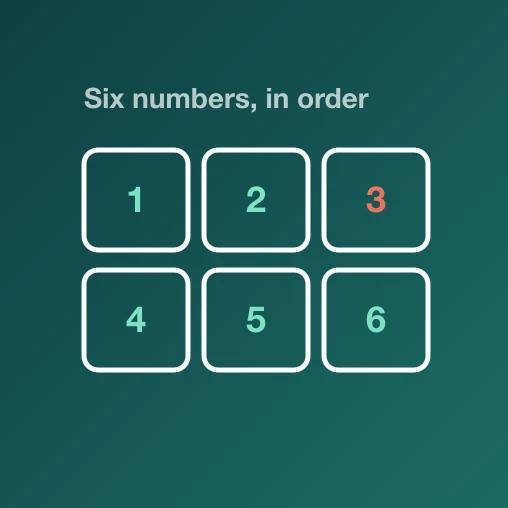
Check five things in order: usage, leak, AHI, event mix and pressure. Then read each number by brand, with a worked night, a 90-day trend and 27 primary sources.
Upload your SD card and see your nights in plain English. Free to start.
 DashboardSleep Score, AHI band, leak and pressure
 Trends & historyA year down to a night
 Breath-by-breath viewerAirflow, pressure, leak tracesPro
 SpO₂ overlayOximeter data on the same nightPro
 Pressure insightsP95, set range, EPR and ramp
 SD card importDrop the card folder, only new nights added
 Mask fit & gearWhich mask actually seals
 Ask your dataPlain-English questions, your own AI keyBYOK
 Year in SleepYour therapy year in one storyNew
 Compliance reportFinds the qualifying window for youPro
 Share with your doctorRead-only, revocable links
 Companion appiPhone, iPad and Android
 Privacy & securityYour data, locked to you
 ResMed AirSense 10 & 11Supported
 ResMed AirCurve 10 & 11 VAutoSupported
 ResMed S9 / LumisSupported
 Philips DreamStation 1In testing
 Fisher & Paykel SleepStyleIn testing
 Löwenstein / DeVilbissWaitlist
 React Health Luna G3In testing
 Transcend MicroWaitlist
 Full face masksFit, leak signature, Mask Analytics
 Nasal masksOver-nose and cradle styles
 Nasal pillowsMinimal-contact fit tips
 Wellue O2RingSupported
 Contec CMS50 familySupported
 Apple Health / Health ConnectResting HR, HRV, SpO₂, sleepSupported
 Mask finderSeven questions, a ranked mask typeYour data
 Machine finderA two-machine shortlist for your prescription
 What is AHI?The apnea-hypopnea index, explained
 What is a good AHI on CPAP?
 CPAP leak rate explained
 Pressure settings explained
 Reading CPAP waveformsAll 17 explainers
 Apnealytics vs SleepHQ
 Apnealytics vs OSCAR
 Apnealytics vs myAir
 Apnealytics vs DreamMapper
 SleepHQ vs OSCARBest CPAP apps in 2026
 How to read CPAP dataStart here: six numbers, in order
 Read your CPAP SD card
 Share data with your doctorChoosing a CPAP mask
 Travel with CPAPAll 11 guides
 iPhone / iPhone DuoLast night before you are out of bed. Apple Health vitals, Face ID.Live
 iPadSame universal app, side-by-side panes and full-width waveforms.Live
 AndroidPhones, tablets and foldables, with Health Connect built in.Live
 Web portalWhere your SD card goes. Every chart, report and setting.Live


