


iPhone / iPhone Duo Live
Last night before you are out of bed. Apple Health vitals, Face ID.
Download on the App Store Apnealytics™
Free on every plan: unlimited imports, the full dashboard and your last 30 nights.
 Compatibility checkerWill my machine work?Type your model. You get a straight answer: supported, waitlist, or why not.Check my machine
If it writes an SD card, we probably read it. ResMed AirMini has no card, so no app can read it.
Sleep Check-up
3 of 6 checks done
Six short screeners, one picture of how you sleep. Earn a milestone for each, save results and get retake reminders.
Latest milestone: Sleepiness check done
 NEWTrack your 90-day compliance windowOpen the calculator
13 free tools. No account needed — sign in to save results and fill answers from your own CPAP data.
Last night before you are out of bed. Apple Health vitals, Face ID.
Download on the App StoreOne account on every screen. Apple Watch vitals sync through Apple Health.
A scannable checklist of night and daytime signs, how symptoms differ in women, men and children, the signs people miss, and what to do next.
Night-time and daytime signs, side by side: tick the ones that apply, or ask a bed partner.
The most common sleep apnea symptoms are loud snoring, pauses in breathing that someone else notices, and waking up gasping or choking [1][2]. During the day, the classic sign is feeling sleepy or worn out even after a full night in bed, often with morning headaches, a dry mouth or trouble focusing [1][2][3].
Many people never notice their own night-time symptoms. As NHLBI puts it, "You may not know you have these symptoms until someone tells you" [1].
This guide gives you a scannable checklist, explains how symptoms differ in women, men and children, and lists the signs people most often miss. It ends with free screeners and what to do next. It is general information, not a diagnosis. Only a sleep study can confirm sleep apnea [21].
Sleep apnea symptoms fall into two groups: what happens while you sleep, and how you feel when you are awake. Tick the ones that apply to you, or ask a bed partner.
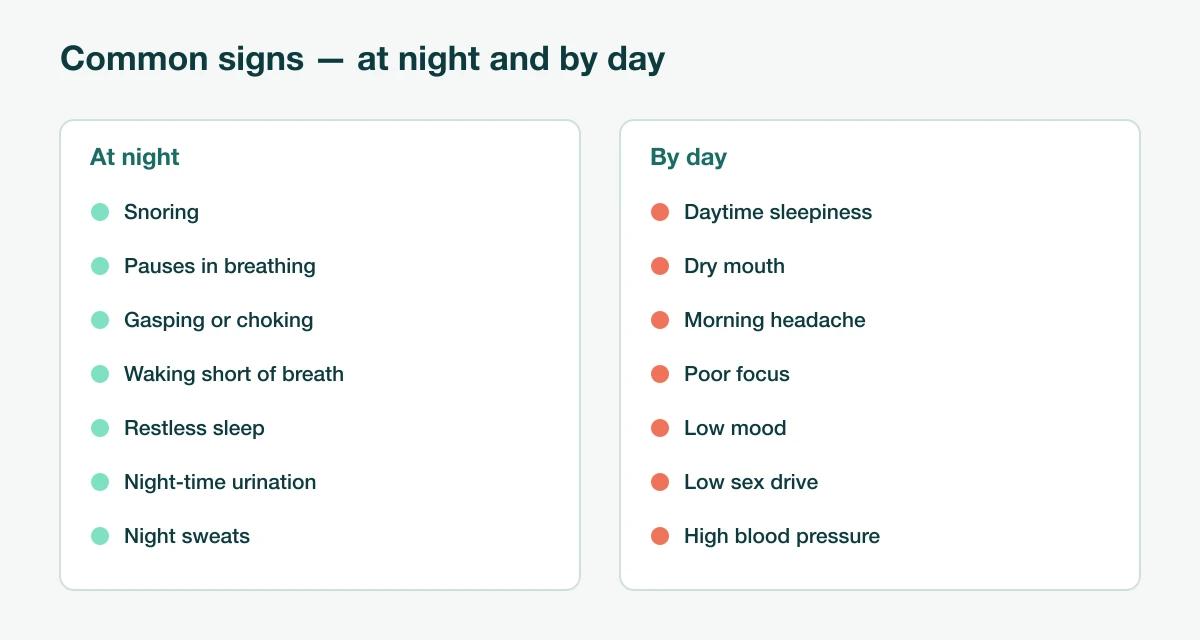
One or two items does not mean you have sleep apnea. Snoring alone is common, and "not everyone who snores has obstructive sleep apnea," according to Mayo Clinic [2]. The pattern matters more: snoring plus witnessed pauses plus daytime sleepiness is the combination that most deserves a conversation with a clinician.
Early signs of sleep apnea are usually quiet. A partner mentions your snoring. You need more coffee than you used to. You wake with a headache or a dry mouth and do not know why.
Because these signs are easy to explain away, sleep apnea often goes undiagnosed for years. A classic Wisconsin study estimated that 82% of men and 93% of women with moderate to severe sleep apnea had never been clinically diagnosed [12].
Worldwide, researchers estimate that about 936 million adults aged 30 to 69 have at least mild obstructive sleep apnea [14]. Most of them are not being treated.
Mild sleep apnea generally means an AHI (apnea-hypopnea index) of 5 to under 15 breathing events per hour; 15 or more is moderate to severe [14]. Our guide to what AHI means explains how that number is measured.
Mild sleep apnea symptoms can look like the full list above, only fainter. Some people with a mild AHI feel very tired; others feel fine.
Men are more likely to have sleep apnea. In the Wisconsin Sleep Cohort, 24% of middle-aged men and 9% of women had an AHI of 5 or more [13].
The "textbook" presentation is also more common in men. NHLBI notes that frequent loud snoring is more common in men [1]. Men may also notice reduced libido or difficulty maintaining an erection [5].
Sleep apnea symptoms in women often look different. NHLBI lists fatigue, headache and insomnia as more common in women [1].
A 2021 review in the Yale Journal of Biology and Medicine found that women report snoring and witnessed apneas less often. Instead, they more often describe mood disturbance, lack of energy, daytime fatigue, morning headache, nightmares and insomnia [11].
The same review gives three reasons women are missed: different presenting symptoms, differences in sleep study findings, and sociocultural factors [11]. It also notes that diagnostic criteria were largely built from studies of mostly male patients [11].
The gap is large. In the Wisconsin study, 93% of women with moderate to severe sleep apnea were undiagnosed, compared with 82% of men [12].
The risk of sleep apnea rises with menopause, according to the American Academy of Sleep Medicine [5]. The Yale review says prevalence "significantly increases following menopause" [11].
This creates a trap. Poor sleep, fatigue and mood changes in midlife are often blamed on menopause alone, which can delay a sleep apnea diagnosis [11]. If you are in perimenopause or past menopause and feel unrefreshed despite treatment for hot flashes or insomnia, ask whether a sleep study makes sense.
Sleep apnea symptoms in children differ from adults. Sleepy adults slow down; sleepy children often speed up.
Mayo Clinic lists these symptoms during a child's sleep [7]:
Mayo also notes that young children may not snore at all and may instead show disrupted sleep [7].
During the day, a child with sleep apnea might [7]:
NHLBI also notes that children with sleep apnea may be overactive and may have bedwetting [1].
Hyperactivity and poor attention can look like ADHD. Mayo Clinic describes these as behavior issues that are more common in children with sleep apnea than in adults; it does not say they are ADHD [7].
An American Academy of Pediatrics technical report found that treating childhood sleep apnea improved behavior and attention [9]. In the CHAT randomized trial, children who had their tonsils and adenoids removed had better behavior, quality of life and symptoms than those who waited. Formal attention and executive-function test scores, however, did not differ [10].
The takeaway: if your child has attention or behavior concerns and also snores, mention the snoring. The AAP recommends that all children and teens be screened for snoring [8]. Mayo Clinic advises seeing your child's healthcare professional for any symptoms, including frequent snoring [7].
For babies and toddlers, talk to your pediatrician directly about any breathing pauses, color changes or noisy, labored breathing during sleep.
| Symptom area | Typical adult / men | Common in women | Common in children |
|---|---|---|---|
| Snoring | Loud, frequent; more common in men [1] | Reported less often [11] | Frequent snoring; young kids may not snore [7] |
| Breathing at night | Witnessed pauses, gasping, choking [2] | Witnessed apneas reported less often [11] | Pauses, gasping, coughing, mouth breathing [7] |
| Sleep quality | Waking often, restless sleep [3][4] | Insomnia more common [1] | Restless sleep, night sweats [7] |
| Daytime energy | Excessive sleepiness [2] | Fatigue, lack of energy [1][11] | Hyperactivity more than sleepiness [7] |
| Head and mood | Morning headache, irritability [2][5] | Headache, mood disturbance, nightmares [1][11] | Morning headaches, aggression or impulsivity [7] |
| Other clues | Low libido, erectile problems, nocturia [2][5] | Symptoms blamed on menopause [11] | New bedwetting, poor weight gain, school problems [7] |
In obstructive sleep apnea, the airway collapses during sleep. In central sleep apnea, the brain briefly stops sending the signal to breathe. Central sleep apnea is less common than obstructive [6].
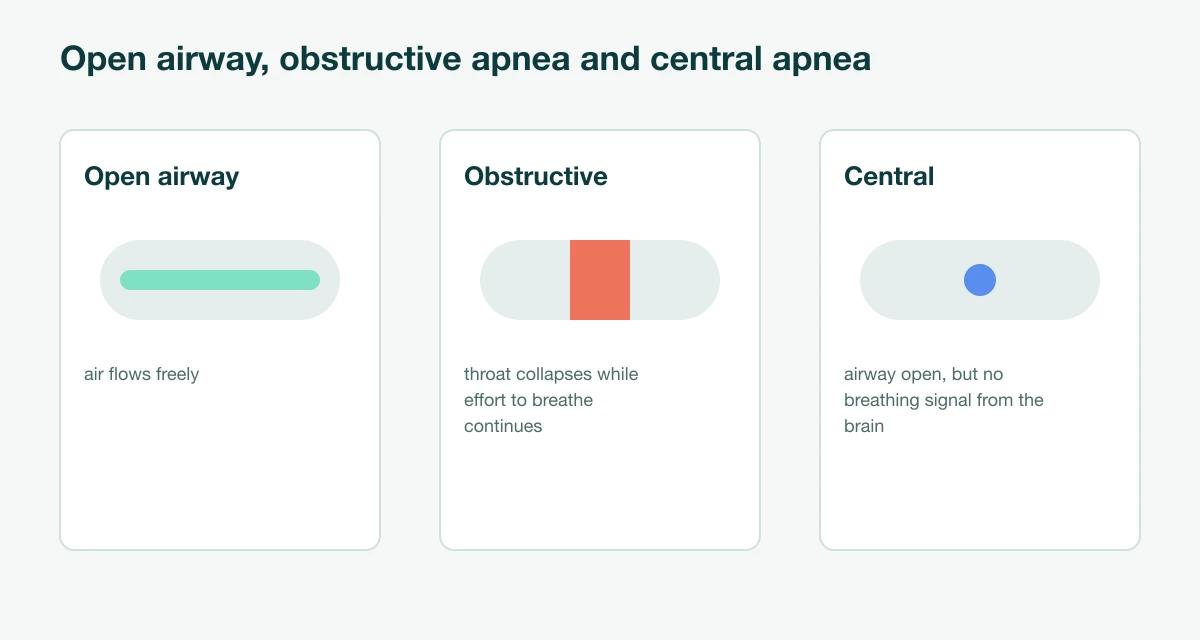
Symptoms overlap heavily. Mayo Clinic lists breathing pauses, sudden awakenings with shortness of breath, insomnia, excessive daytime sleepiness, trouble focusing, mood changes, morning headaches and snoring [6].
The main practical difference is snoring. With central sleep apnea, snoring "may not be as noticeable" as with obstructive sleep apnea [6]. So "I don't snore" does not rule out sleep apnea, especially if you wake up short of breath or cannot stay asleep.
If you already use CPAP, our guide to central vs obstructive apnea on CPAP explains how the two event types show up in your machine data.
Waking at night to pee is a listed symptom of sleep apnea [1][2]. A 2023 systematic review found that nocturia in people with sleep apnea increases along with sleep apnea severity [15].
A 2023 meta-analysis of six studies and 2,950 patients found a significant association between sleep apnea and GERD (odds ratio 1.53) [17]. An association is not proof that one causes the other. But nightly reflux plus snoring is worth mentioning to your doctor.
Morning headache is a recognized symptom of sleep apnea [2][3]. In one study of 1,131 people referred for a sleep study, 29% reported morning headaches [18].
Waking with a dry mouth or sore throat is on Mayo Clinic's list of daytime symptoms [2]. It often goes along with mouth breathing and snoring.
Mayo Clinic advises seeing a healthcare professional if you, or your partner, notice any of these [2]:
If you have nodded off or nearly nodded off at the wheel, do not wait. Untreated sleep apnea is a significant contributor to motor vehicle crashes. A systematic review estimated the crash-rate ratio for people with obstructive sleep apnea at likely between 1.21 and 4.89 [20].
Stop driving when drowsy and book an appointment soon. In the UK, the NHS advises that once excessive sleepiness from sleep apnea is confirmed, you must not drive until symptoms like severe tiredness are under control [3].
Witnessed breathing pauses are the other big one. If someone has watched you stop breathing during sleep, that is a reason to ask for a sleep evaluation. Our article on whether sleep apnea is dangerous covers the long-term risks.
Screening questionnaires can help you decide whether to raise sleep apnea with a clinician. They cannot diagnose it. The American Academy of Sleep Medicine strongly recommends against using questionnaires to diagnose sleep apnea without a sleep test [21].
Each of these takes a few minutes:
Take your results to your appointment. If your score suggests higher risk, the next step is usually a home sleep apnea test or an in-lab sleep study. Our sleep apnea test guide explains both options.
For many people, symptoms improve with consistent treatment. The American Academy of Sleep Medicine strongly recommends positive airway pressure (PAP) for adults with obstructive sleep apnea and excessive sleepiness [22].
Research has tracked specific symptoms:
Our sleep apnea treatment guide covers CPAP and the alternatives.
The AASM says follow-up after starting PAP should include monitoring of objective efficacy and usage data [22]. In plain terms, two numbers matter most:
If your symptoms are not improving, those two numbers are the first place to look with your clinician. Our guide to what a good AHI on CPAP looks like explains the targets most clinicians use.
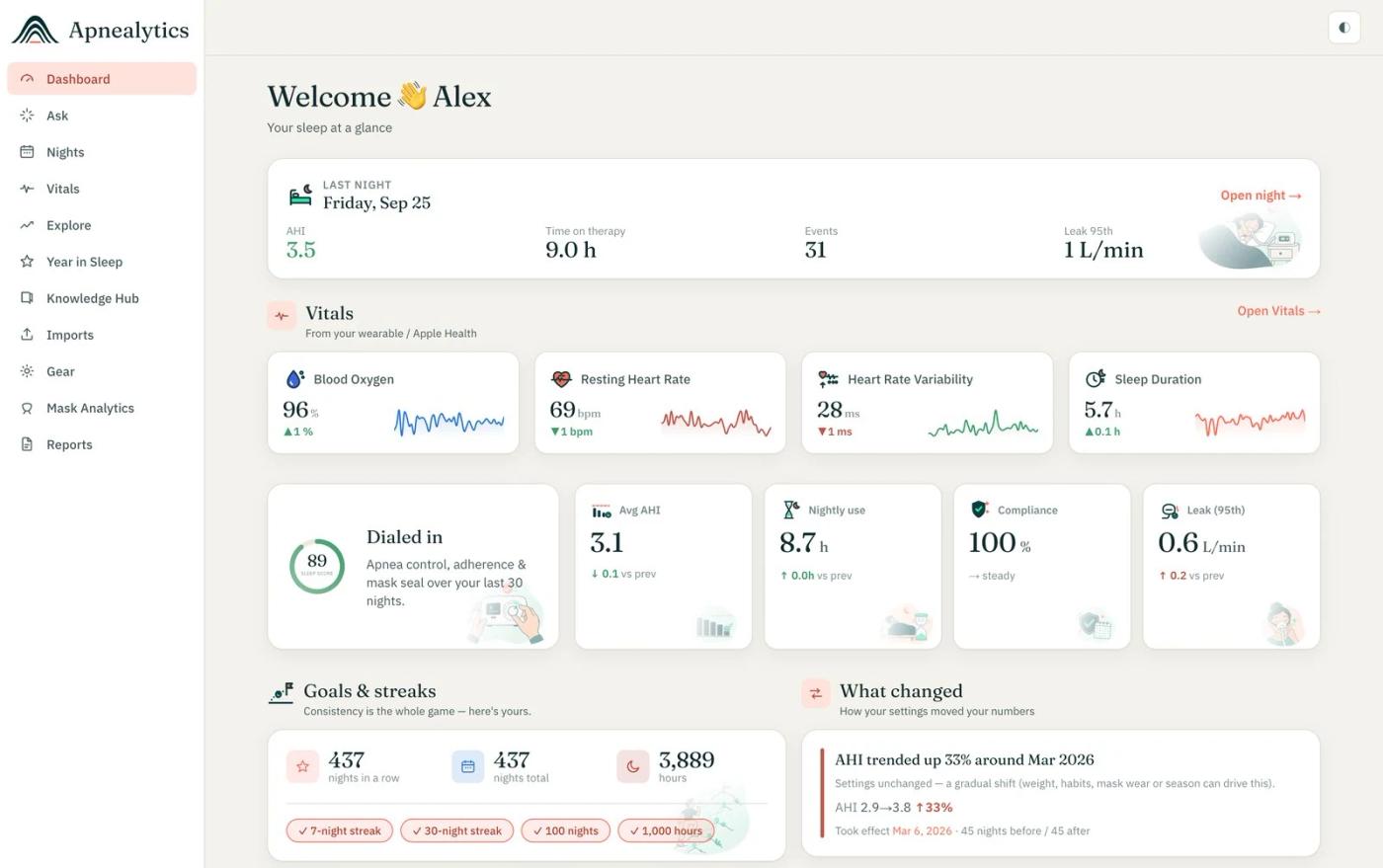
Apnealytics reads the SD card from ResMed machines (Philips DreamStation 1 and Fisher & Paykel SleepStyle are in testing) and charts your nightly usage and residual AHI side by side, so you can see whether better nights line up with fewer headaches or less daytime sleepiness. It is a tracking tool, not a diagnostic device. Any changes to your therapy or pressure should go through your clinician.
The first signs are usually loud snoring that a partner notices, waking up unrefreshed, and feeling sleepy during the day. Some people first notice morning headaches, a dry mouth on waking, or getting up at night to urinate. Because these are easy to explain away, many people live with them for years before anyone suggests a sleep study.
Yes. Snoring is common in obstructive sleep apnea, but not everyone snores. Women report snoring less often, young children may not snore at all, and snoring may be less noticeable with central sleep apnea. If you have daytime sleepiness, insomnia or wake up short of breath, ask about sleep apnea even without snoring.
Daytime symptoms include excessive sleepiness or fatigue, morning headaches, a dry mouth or sore throat on waking, trouble concentrating, memory problems, irritability and mood changes. Some people also notice lower sex drive. Falling asleep while driving or at work is a serious warning sign that needs prompt medical attention.
Women are less likely to report loud snoring or witnessed pauses. They more often describe fatigue, insomnia, morning headaches, low energy, mood changes and nightmares. These overlap with depression and menopause symptoms, which is one reason women are under-diagnosed. Risk also rises after menopause.
Children may snore, breathe through the mouth, sleep restlessly, sweat at night, or start wetting the bed after being dry. During the day they may seem hyperactive, impulsive or inattentive rather than sleepy, and they may struggle at school. If your child snores often, talk to their pediatrician.
No. Tools like STOP-Bang, the Epworth Sleepiness Scale, NoSAS and the Berlin Questionnaire estimate risk or sleepiness. They help you decide whether to talk to a clinician. The American Academy of Sleep Medicine recommends a home sleep apnea test or in-lab sleep study for diagnosis, not a questionnaire alone.
Many improve. Studies show fewer morning headaches, fewer nighttime bathroom trips and lower daytime sleepiness scores after consistent PAP therapy. Results depend on wearing the mask most of the night and keeping residual AHI low. If symptoms persist on CPAP, review your usage and AHI data with your clinician.
Not medical advice. Apnealytics is a tracking and coaching tool, not a diagnostic device. Machine-estimated numbers are not a clinical diagnosis; talk to your clinician about your therapy.
Written by
Founder of Apnealytics. A CPAP user who builds software, not a sleep physician.
More from the teamKeep reading
How a CPAP machine works, CPAP vs APAP vs BiPAP vs ASV, the features worth comparing, prescription and insurance basics, and what your machine records.
Oral appliances, Inspire and Genio implants, nasal EPAP, positional and tongue devices: what each does, who it suits, FDA status and evidence.
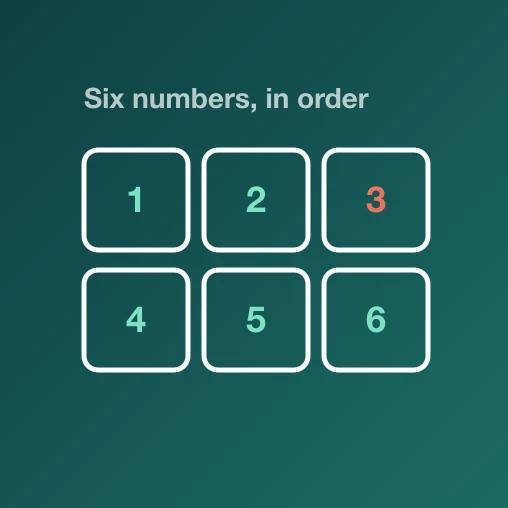
Check five things in order: usage, leak, AHI, event mix and pressure. Then read each number by brand, with a worked night, a 90-day trend and 27 primary sources.
Upload your SD card and see your nights in plain English. Free to start.
 DashboardSleep Score, AHI band, leak and pressure
 Trends & historyA year down to a night
 Breath-by-breath viewerAirflow, pressure, leak tracesPro
 SpO₂ overlayOximeter data on the same nightPro
 Pressure insightsP95, set range, EPR and ramp
 SD card importDrop the card folder, only new nights added
 Mask fit & gearWhich mask actually seals
 Ask your dataPlain-English questions, your own AI keyBYOK
 Year in SleepYour therapy year in one storyNew
 Compliance reportFinds the qualifying window for youPro
 Share with your doctorRead-only, revocable links
 Companion appiPhone, iPad and Android
 Privacy & securityYour data, locked to you
 ResMed AirSense 10 & 11Supported
 ResMed AirCurve 10 & 11 VAutoSupported
 ResMed S9 / LumisSupported
 Philips DreamStation 1In testing
 Fisher & Paykel SleepStyleIn testing
 Löwenstein / DeVilbissWaitlist
 React Health Luna G3In testing
 Transcend MicroWaitlist
 Full face masksFit, leak signature, Mask Analytics
 Nasal masksOver-nose and cradle styles
 Nasal pillowsMinimal-contact fit tips
 Wellue O2RingSupported
 Contec CMS50 familySupported
 Apple Health / Health ConnectResting HR, HRV, SpO₂, sleepSupported
 Mask finderSeven questions, a ranked mask typeYour data
 Machine finderA two-machine shortlist for your prescription
 What is AHI?The apnea-hypopnea index, explained
 What is a good AHI on CPAP?
 CPAP leak rate explained
 Pressure settings explained
 Reading CPAP waveformsAll 17 explainers
 Apnealytics vs SleepHQ
 Apnealytics vs OSCAR
 Apnealytics vs myAir
 Apnealytics vs DreamMapper
 SleepHQ vs OSCARBest CPAP apps in 2026
 How to read CPAP dataStart here: six numbers, in order
 Read your CPAP SD card
 Share data with your doctorChoosing a CPAP mask
 Travel with CPAPAll 11 guides
 iPhone / iPhone DuoLast night before you are out of bed. Apple Health vitals, Face ID.Live
 iPadSame universal app, side-by-side panes and full-width waveforms.Live
 AndroidPhones, tablets and foldables, with Health Connect built in.Live
 Web portalWhere your SD card goes. Every chart, report and setting.Live


